Authentic Small Town Life
mapGrowing up in the
second largest city in the USA, I used to watch reruns of
The Andy Griffith Show and wonder if anyone actually lived like that. At the times when the pace in Chicago was too frenetic or overwhelming, I would daydream about living in a town like Mayberry: Simple Life, genuine people, simple pleasures. Atlanta, as interesting as it is nowhere near this idyllic picture, but about an hour and a half Northwest of town, I found a place that claims this lifestyle, and better yet achieves it. I truly enjoyed my short stay in
Cave Spring, GA.Now, if you don’t read any further and just look at the pictures, remember this one thing, bring some empty water containers (I’ll explain later).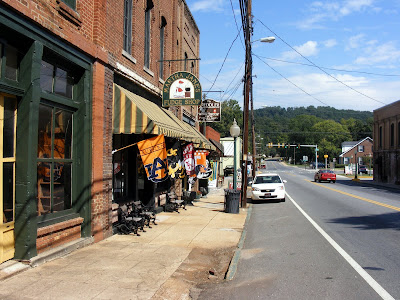
Cave Spring is a town of a little under 1000 people. It’s the embodiment of Georgia small town life and is proud that it only needs one stoplight. But unlike many little villages that dot the highway here and there, this town about 15 miles outside of
Rome has two very distinct advantages: First, the people and businesses are open and welcoming, and, secondly, it has a unique geographical feature that makes it worth the trip.
We started the day, with a fine breakfast at the
Cave Spring Café . Too often I get to a little town and the place looks quaint and charming, but the shops and restaurant are shuttered and locked. But the folks at this café were happy to see us even though we arrived shortly before closing (they close at 4pm on Saturday and Sunday). I enjoyed a genuine country breakfast with eggs, hand cut potatoes, and homemade sausage gravy. They had lunch and dinner on the menu also, along with some fine looking desserts. Another location, the
Tumlin House Bed & Breakfast, does a
fine dining feature only on Saturday nights, but we weren’t there on Saturday (If you go, drop me a note or add a comment).
We then walked around the downtown square. We were able to enter 6 different establishments and the specialty of the town must be antiques. Different locations were varied from high end to low end, but all the proprietors were smiling, friendly and willing to converse. I bought a couple of old fashioned rocks glasses that were marked a buck a piece, but the lady gave me them both for a dollar.
I asked one gentlemen when
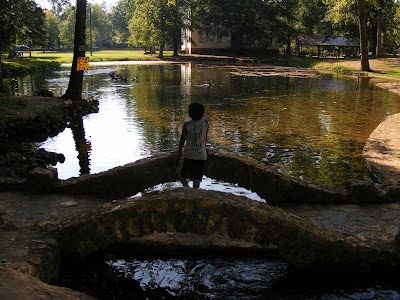
Rolater Park closed, and he said. “doesn’t really close, it’s a park?” This made we wonder how we devolved to a place where our parks always close. How do you lock up a tree? Why should we need to close off a nice field of grass or a stream? This is one clear way the people of Cave Springs are better than us: they trust each other and other people.
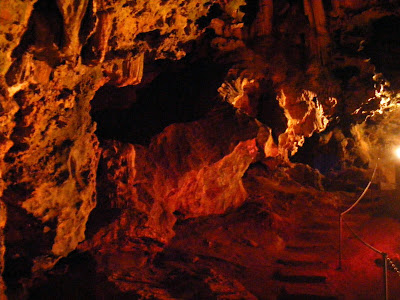
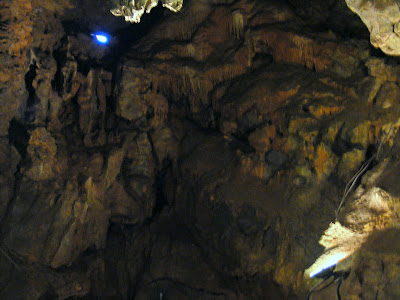
The park contains the fascinating geographical attribute that makes the trip worthwhile. Since the town is called Cave Spring, that’s exactly what’s there, a cave and a spring.
The Cave does close, normally around 6 pm on weekends and 5 pm weekdays, but they say they stay later if people demand it. It costs a whopping $1 a head to enter the cave, and the rock formations are beautiful and the temperature is cool for those hot Georgia days. It is very easy to navigate and virtually anyone, even those with wheelchairs could traverse the first ¾ of the trip. The last portion has some large steep rock stairs with a heavy chain fence to assist your climb, but even if you don’t get that far its clearly worth the dollar.
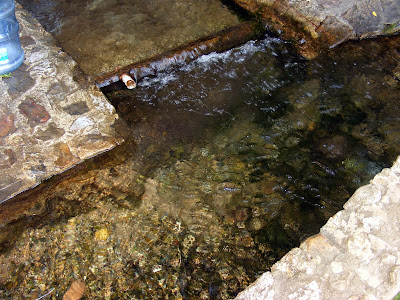
Outside the cave there is public access to the Spring. At the entrance to the cave they will provide you will a small cup so that you can taste the naturally clean, cold water. But you probably will want to bring along some jugs to carry some of this free, natural water back to your life wherever it may be. I was a little taken aback at first at the thought of drinking water from a spring, but I saw a steady stream of townies, driving up to load up their clean water for the week. The water tasted pure and refreshing. I asked the one gentleman if it was safe, he said that the Spring starts somewhere deep in the mountain and “No one can get to it to mess with it.” He also explained that the same water is delivered to all locations in town and also to the Alabama town of Fort Payne. But the purists like it straight from the spring because they don’t add that “touch of fluoride” they are required to because of city requirements. I thought that this was another way the people of Cave Springs were superior to me: I was afraid to drink water from a natural stream, the way people have for thousands of years, and they knew how this was supposed to be.
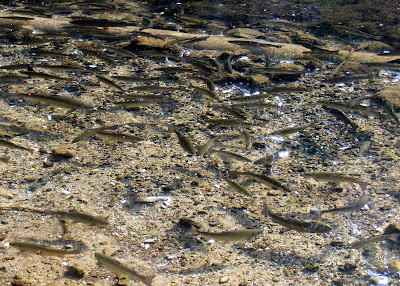
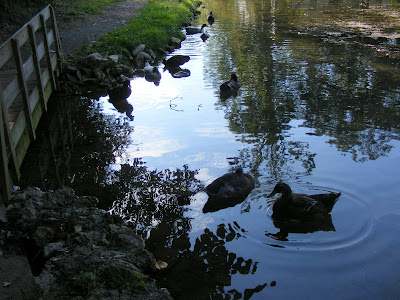
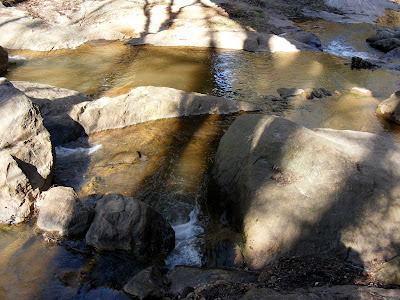
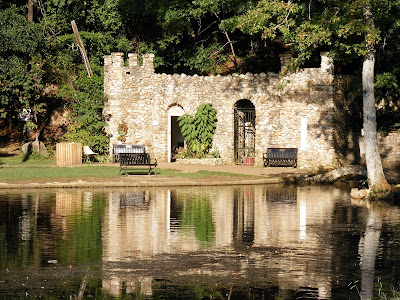
The spring then feeds a small pond that’s just chock full of trout, easy to see with such crystal clear water. No, you can’t fish there (except kids on one day a year), but for a quarter you can buy some fish food, feed the trout, and watch them scramble for it. The pond also has a fine contingency of ducks to watch and feed too (maybe bring some bread?). The pond then feeds a shallow wading stream that you can dip your feet into to sense it cool refreshing waters (at about 60 degrees anytime of year). And yes it was cold. The stream then becomes a place where fishing is allowed, but is also diverted to a swimming pool (open during the summer), where kids can have a fine time on a hot summer day.
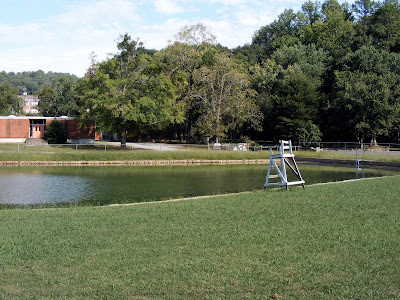
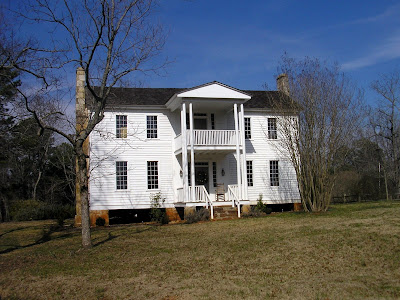
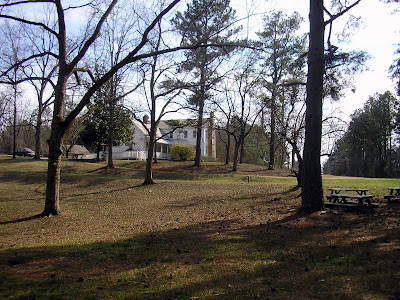
Inside the park, are also a handful of historic buildings (
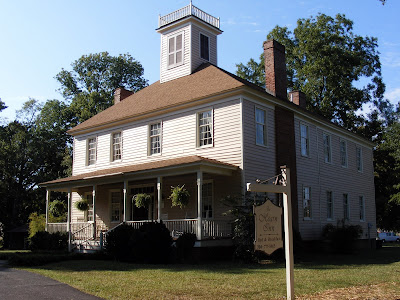
info on the buildings ), including Cave Spring Baptist Church (built before the Civil War), the Hearn Academy (originally a learning academy called the Manual Labor School), and the Hearn Inn (a currently functioning bed and breakfast in the heart of the park). They are open for certain functions, but weren’t the day we were there.
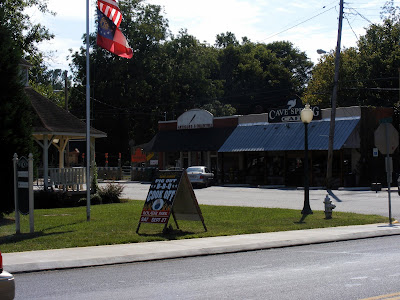
As I was leaving the park, I saw the one law officer (who looked nothing like Andy Griffith) sitting in the gazebo, 20 feet from his car, reading the paper. This place wasn’t Mayberry, but did a fine approximation. Cave Springs is the town that claims to be life the way it was, and maybe the way it is supposed to be. Many other places claim this, but this place does it. I have seen it with my own eyes, take a short drive and you can see for your self.